
At some point, almost everyone notices it. You feel a little stiffness when you stand up from a chair. Then, it becomes a sharp twinge in your knees when walking up the stairs. Eventually, it settles into a lingering soreness that simply refuses to go away.
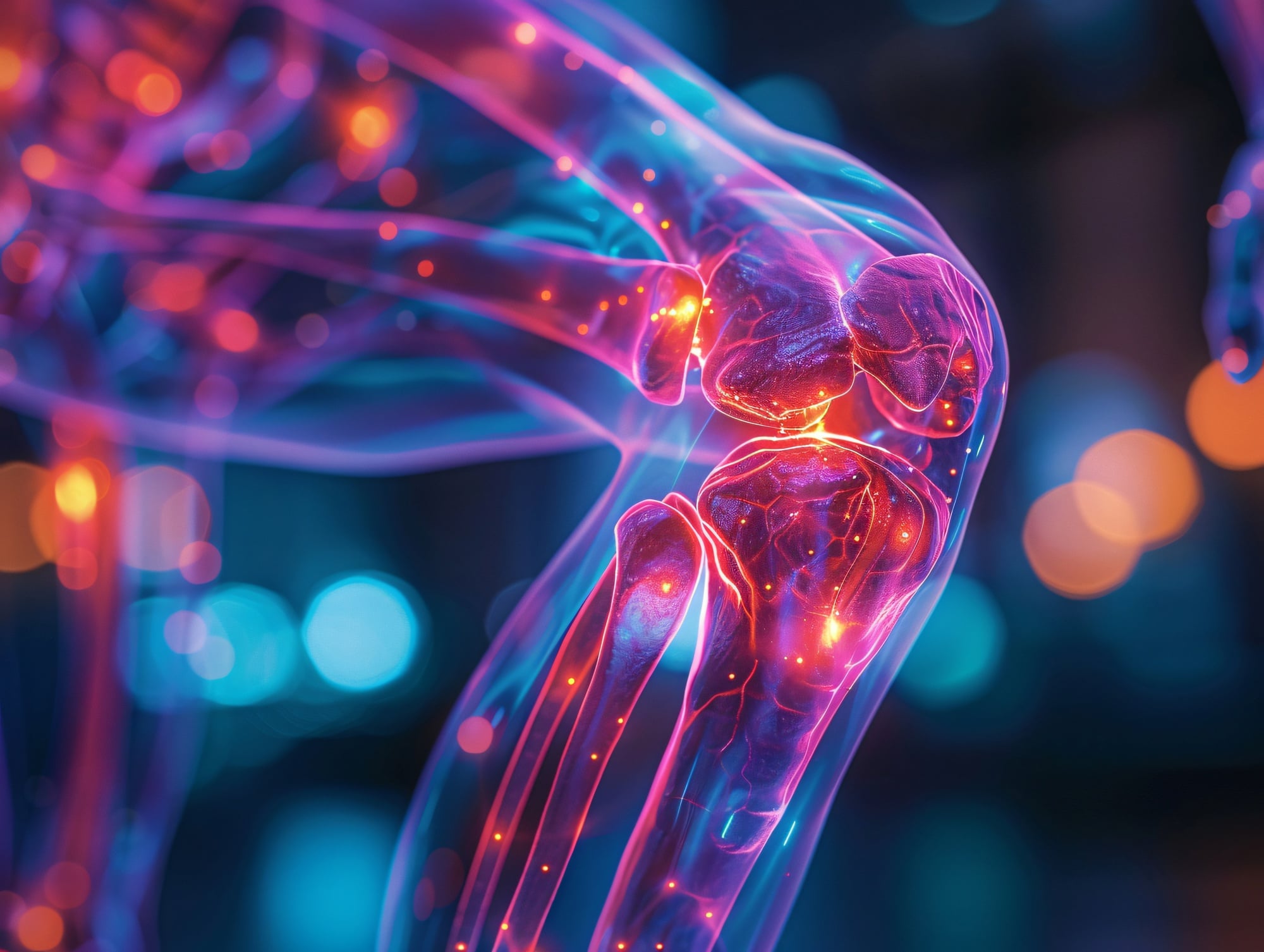
It is incredibly frustrating. You know your body should feel better than this. But when you examine the biology of an aging circulatory system, a very different picture of joint discomfort emerges.
- – Why do your joints feel the most rigid first thing in the morning?
- – What is actively blocking oxygen from reaching your damaged cartilage?
- – Is it truly just “wear and tear,” or a missing biological mechanism?
It’s easy to blame your age or assume you need standard protein to rebuild the joint. But through advanced clinical observation, we now know exactly why standard solutions fail to support aging joints. The real culprit is hiding in your bloodstream.
The Danger of the “Fibrin Roadblock”
Deep inside your body, you produce a sticky, insoluble, mesh-like protein called Fibrin. Its primary job is essential: it helps form scar tissue and aids in clotting when you are injured.
However, Fibrin is a double-edged sword. Think of it like a biological spider web. When there is too much Fibrin in your system, this web becomes incredibly dense. It acts as a roadblock, physically blocking the flow of oxygen-rich red blood cells from reaching your damaged cartilage and tissues.
But the real question is: How do you clear this microscopic roadblock without resorting to harsh chemicals?
When your joints are starved of oxygen and vital nutrients, they cannot repair themselves. This leads directly to chronic, simmering inflammation and the constant aching you feel when you bend or stretch.

Understanding the “Biological Pac-Man” Metaphor
To understand why your body can no longer clear this sticky mesh on its own, we have to look at your enzymes. In younger bodies, a critical group of compounds called proteolytic enzymes maintains healthy Fibrin levels by ‘eating’ up any excess mesh once it completes its repair work.
They act exactly like microscopic Pac-Men, navigating your bloodstream and safely dissolving the excess roadblocks.
But there is a catch. Past the age of 27, our natural production of these enzymes plummets. Making it harder for our bodies to dissolve excess fibrin, and leaving your joints trapped behind a wall of restricted blood flow.
Clinical data reveals that thanks to recent breakthroughs in medical science, it is now possible to directly replenish proteolytic enzymes. By reintroducing them, leading doctors say it is like ‘tricking’ your joints into thinking they are 25 years old again.
So, how do we deliver these enzymes? Researchers have discovered that the most effective way to support aging joints requires a specific matrix of targeted, highly absorbable nutrients.
The Cellular Blueprint: What Your Joints Actually Need
To actually soothe a stiff knee, support your lower back, and maintain your mobility, your cells require a precise combination of targeted elements to clear the Fibrin. Here is how they work together:
Proteolytic Enzymes (The Blockage Clearers)
Sourced from powerful natural extracts like Bromelain (from pineapple) and Papain, these specialized enzymes travel directly into your bloodstream. They seek out and break down the excess Fibrin proteins that are choking off your joint tissue, allowing fresh oxygen to finally return to the area.
Boswellia Extract (The Joint Soother)
Hailed as a potent natural remedy, Boswellia is a safe antioxidant that helps relieve irritating substances in the body. Once the enzymes clear the Fibrin roadblock, Boswellia floods the joint to provide a deeply balanced, soothing inflammatory response.
Devil’s Claw (The Mobility Restorer)
This ancient African botanical specifically supports healthy Cox-2 activity. Combined with the enzymes, it acts as the final step in the protocol, drastically improving joint comfort so you can stretch, climb stairs, and walk effortlessly.
An Unexpected Opportunity
When you combine these critical enzymes and botanicals into a single, highly concentrated daily dose, the results are profound. Proper blood flow naturally leads to a massive reduction in morning stiffness. It helps lubricate dry joints and allows you to stay active without paying for it the next day.
Usually, accessing a clinical-grade proteolytic enzyme formula like Heal-n-Soothe (which contains these exact 12 ingredients) requires an investment of $69.95.

However, due to an unexpected inventory mistake at the warehouse, a limited batch of evaluation bottles has been authorized for immediate release. This means, for a very short window, you can experience this exact protocol completely complimentary—you only cover the small cost of shipping.
Are You Ready to Clear the Blockage?
Stop fighting your biology with generic solutions that don’t address the Fibrin roadblock. This special evaluation offer is strictly first-come, first-served. Secure your bottle today to flood your joints with oxygen, clear out excess Fibrin, and experience the freedom of calm, comfortable movement.
References & Scientific Literature
- Brien, S., et al. (2004). Bromelain as a Treatment for Osteoarthritis: a Review of Clinical Studies. Evidence-Based Complementary and Alternative Medicine, 1(3), 251-257.
[View Study on PubMed] - Walker, A. F., et al. (2002). Bromelain reduces mild acute knee pain and improves well-being in a dose-dependent fashion in an open study of otherwise healthy adults. Phytomedicine, 9(8), 681-686.
[View Study on PubMed] - Kimmatkar, N., et al. (2003). Efficacy and tolerability of Boswellia serrata extract in treatment of osteoarthritis of knee–a randomized double blind placebo controlled trial. Phytomedicine, 10(1), 3-7.
[View Study on PubMed]