
At some point, almost everyone notices the subtle shift. You bend down to pick something up and feel an unexpected catch in your lower back. Then, a simple walk requires you to consciously manage your posture just to avoid discomfort. Eventually, it settles into a lingering physical exhaustion that makes every movement feel like an uphill climb.
It is incredibly frustrating. You know your body should be more resilient than this. You remember a time when you didn’t have to negotiate with your joints before getting out of bed. But when you examine the biology of an aging, over-stressed musculoskeletal system, a very different picture of physical fatigue emerges.
- – Why does your body feel the most rigid right when you try to be active?
- – What is actively triggering the hidden tension inside your daily movement patterns?
- – Is it truly just “aging,” or a missing biological mechanism?
It’s tempting to blame the calendar on the wall or assume you just need to force your way through more intense gym sessions. But through advanced clinical observation, we now know exactly why standard fitness solutions fail to support aging bodies. The real culprit is hiding deep within how your nervous system communicates with your muscles.
The Danger of the “Movement Debt”
Deep inside your system, daily environmental habits like prolonged sitting, looking down at screens, and stressful commutes trigger a protective response. Its primary job is essential: it helps defend your joints and tissues when they are placed in unnatural, sustained positions. It acts as an internal shield.
However, this response comes with a heavy cost. Think of it like a biological circuit breaker that flips off and refuses to reset.
When there is chronic structural stress from decades of modern living, your nervous system simply shuts down communication with key muscle groups to protect you from perceived danger. The brain stops sending the signal to engage.
But the real question is: How do you reactivate these dormant muscles without causing further damage? Examine the exact mechanism responsible for unlocking restricted tissue right here.
When your body is trapped in this cycle, it cannot properly stabilize itself. This leads directly to a silent movement compensation. Because your primary muscles are turned off, your brain forces smaller, weaker joints to pick up the slack.
This creates simmering joint tension, and the constant physical drain you feel when you try to exercise. Your body is quite literally fighting itself just to stay upright.
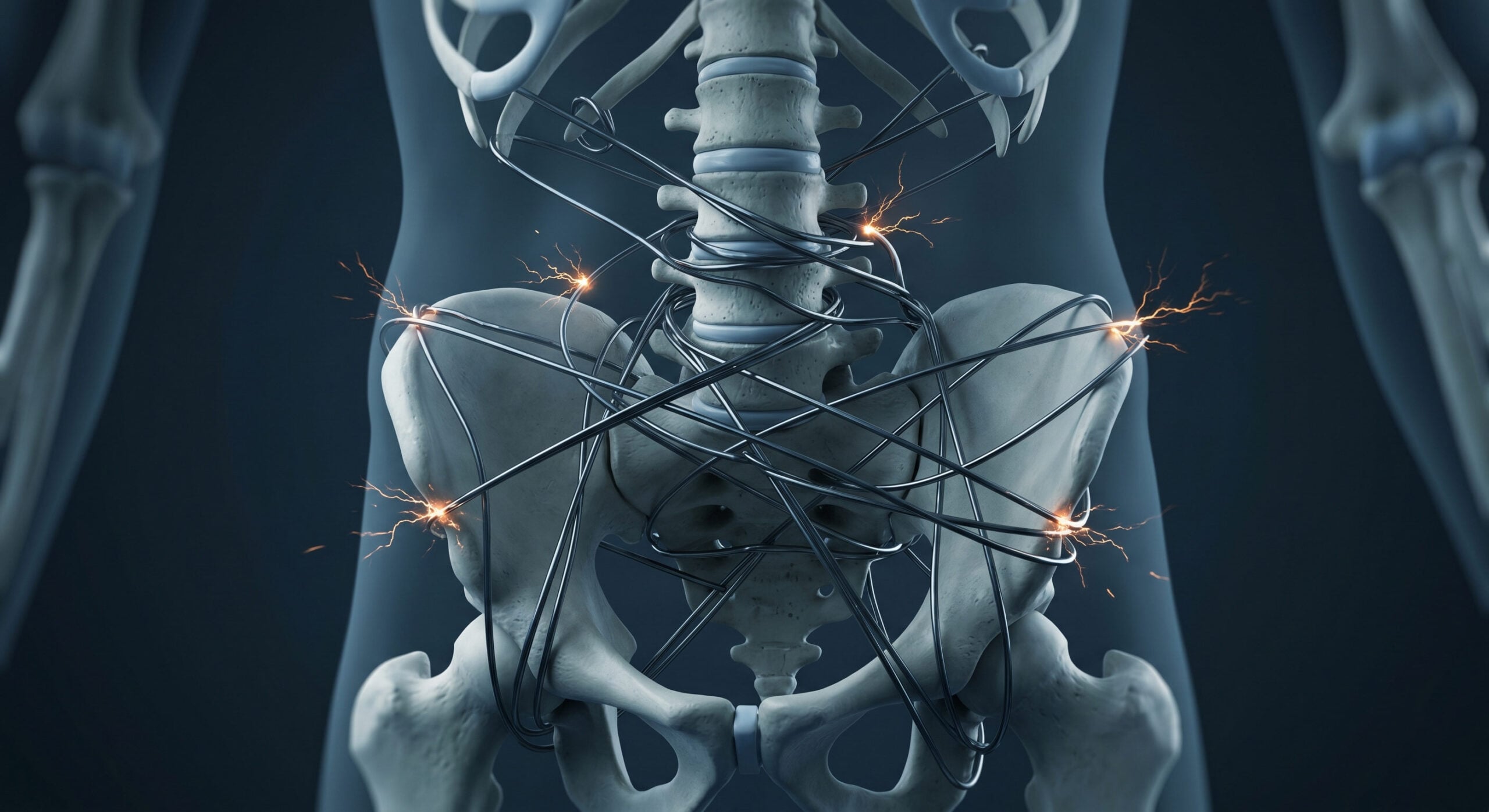
Understanding the “Cracked Foundation” Metaphor
To understand why your body struggles to correct this on its own, we have to look at what happens when you try to exercise through the pain. Most trainers will tell you to simply push harder, lift heavier, or stretch more aggressively.
But there is a catch. When you strength train on top of dysfunction, you do not fix the problem. You ingrain it deeper.
If your glute muscles are “turned off” by your nervous system, your lower back will try to absorb the force of your movements. Every squat, lunge, or heavy lift just creates further damage to the compensating joints.
Clinical data reveals that building performance on top of compromised movement patterns simply accelerates tissue damage. By identifying the specific areas where the nervous system has restricted access, movement specialists say it is possible to directly reboot these pathways, allowing the body to safely absorb force again.
So, how do we deliver this support? Researchers have uncovered that the most effective way to safeguard aging joints isn’t found in a crowded gym. It requires a specific matrix of targeted, low-impact reactivation protocols.
The Cellular Blueprint: What Your Body Actually Needs
To actually soothe physical tension, restore your confidence, and maintain your structural stamina, your system requires a precise combination of targeted movements to reset the breaker. It is an educational process for your brain, teaching it that it is safe to let go of the tension.
Here is the foundation of that process:
Pinpoint the Shutdown (The Diagnostic Phase)
The first step requires evaluating why your body compensates the way it does. You must identify the exact structural locations where your brain has halted communication. Surprisingly, the root cause of your discomfort is often located far away from the actual site of your pain.
Reactivate the Pathways (The Neural Reset)
Once the restricted zones are located, specific, gentle techniques are used to turn them back on. This process guides your nervous system to drop its defensive posture, allowing your muscles to engage properly without unnecessary friction or force.
Restore Natural Freedom (The Integration Phase)
This final step reinforces the newly opened pathways. By moving correctly, you secure the connection between your brain and your body, drastically improving your mobility. This allows you to stay active effortlessly, retraining your body to trust its own strength.
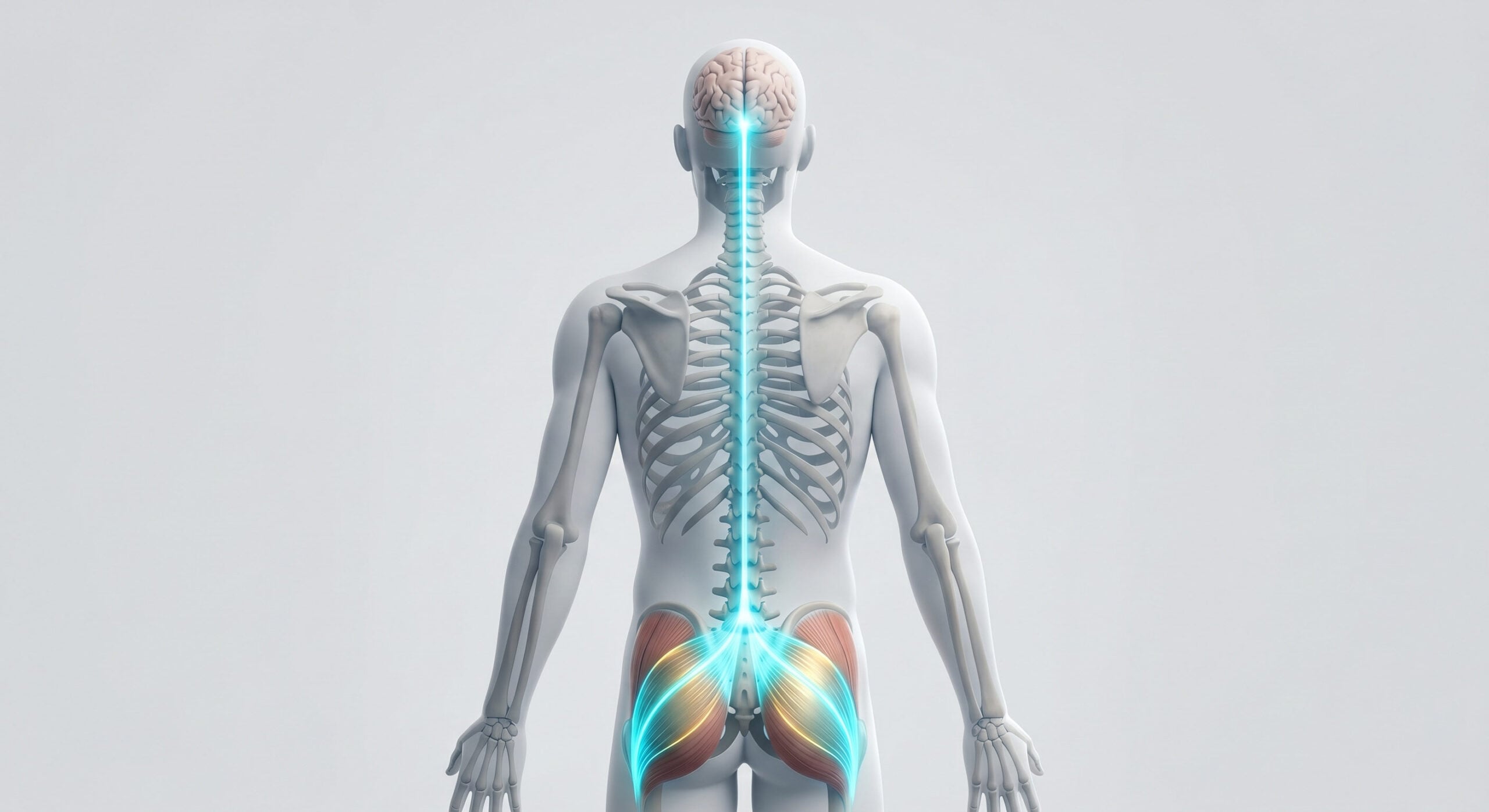
The Compound Effect of Restored Movement
When you stop trying to build strength on top of dysfunction, the benefits ripple outward into every area of your life.
It is not just about returning to the activities you love, like hiking, golfing, or playing with grandchildren. It is about the mental energy you reclaim when you are no longer distracted by a nagging ache in your knee or an unpredictable catch in your back.
Proper structural support naturally leads to a massive reduction in joint fatigue. It helps release tension, improves your daily stamina, and allows you to move the way you did ten years ago, without paying for it with exhaustion the next morning.
An Unexpected Educational Opportunity
Usually, uncovering exactly how to map and correct these compensation patterns requires extensive private sessions with a specialist. It takes a trained eye to observe where your nervous system has locked your body down.
My colleague Robbie Stahl, a world-renowned movement expert and founder of The Fitness Doctor, has spent 27 years studying this exact biological phenomenon. He has successfully guided thousands of individuals through the process of safely turning their dormant muscles back on.

Instead of letting people continue to damage their bodies with generic workout routines, he is hosting a complimentary 5-day educational challenge. This is an immersive journey designed to teach you exactly how to identify your own movement roadblocks.
This means you can evaluate the blueprint to safeguarding your joints and reactivating your muscles immediately, from the comfort of your own home.
Are You Ready to Clear the Blockage?
Stop fighting your biology by building performance on top of a cracked foundation. Secure your spot in the upcoming session today to nourish your physical pathways, clear out movement fatigue, and experience the freedom of resilient, sustained mobility.
Access Your Blueprint to Restore Mobility and Release Tension Here
References & Scientific Literature
- Hodges, P. W., & Tucker, K. (2011). Moving differently in pain: A new theory to explain the adaptation to pain. Pain, 152(3 Suppl), S90-S98.
[View Study on PubMed] - Panjabi, M. M. (1992). The stabilizing system of the spine. Part I. Function, dysfunction, adaptation, and enhancement. Journal of Spinal Disorders, 5(4), 383-389.
[View Study on PubMed] - Lund, J. P., et al. (1991). The pain-adaptation model: a discussion of the relationship between chronic musculoskeletal pain and motor activity. Canadian Journal of Physiology and Pharmacology, 69(5), 683-694.
[View Study on PubMed]